
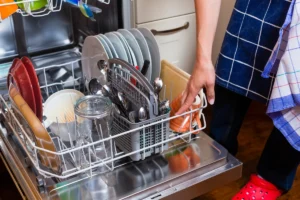
Person unloading clean dishes and silverware from an open dishwasher in an Edmond home.
You open your dishwasher expecting clean dishes. Instead, you’re hit with a smell that reminds you of old food, mildew, or something you can’t quite identify, but definitely don’t want lingering in your kitchen.
Sound familiar?
A smelly dishwasher is one of the most common appliance complaints we hear from Edmond homeowners.
Fortunately, unpleasant odors usually don’t mean you need to replace the appliance. In many cases, they’re caused by trapped food debris, standing water, or a maintenance issue that’s been building up over time.
Here’s why your dishwasher smells bad, and when it’s time to call for professional dishwasher repair.
Food Debris Could Be Trapped in the Filter
Your dishwasher works hard to wash away grease, crumbs, and leftover food after every meal.
Most of that debris gets flushed away during the drain cycle, but not all of it. Many modern dishwashers have a removable filter near the bottom of the tub that catches larger food particles before they can clog the drain pump. Over time, bits of pasta, rice, grease, vegetables, and other food scraps collect there.
Eventually, they begin to decompose. That’s when the unpleasant odors start.
If your dishwasher has developed a sour or rotten smell, checking and cleaning the filter is one of the easiest places to start. Many manufacturers recommend cleaning the filter about once a month (less frequently is acceptable if you rinse your dishes well), although homes that run the dishwasher daily may need to do it more often.
Standing Water Can Lead to Odors
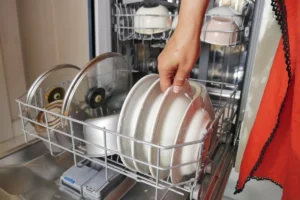
Homeowner loading wet dishes and pot lids into the bottom rack of an open dishwasher.
When a dishwasher finishes its cycle, there should only be a small amount of clean water remaining near the drain. If you notice several inches of standing water at the bottom of the tub, something isn’t draining properly.
That stagnant water quickly becomes a breeding ground for bacteria, mold, and mildew, all of which produce unpleasant odors. Several problems can prevent proper drainage, including:
- A clogged drain hose
- A blocked garbage disposal connection
- A clogged drain filter
- A failing drain pump
If water remains after every cycle, it’s worth having the dishwasher inspected before a small drainage problem turns into a much larger repair.
Mold and Mildew Love Damp Dishwashers
Dishwashers spend their lives in warm, humid conditions, making them an ideal environment for mold. The rubber door gasket is especially vulnerable because moisture tends to collect inside its folds.
Soap residue, grease, and food particles create the perfect place for mold and mildew to grow unnoticed. Many homeowners don’t realize how much grime collects there until they wipe the gasket with a damp cloth.
If you notice black spots, slimy buildup, or a musty odor every time you open the door, the gasket may simply need a thorough cleaning. Leaving the dishwasher door slightly open after each cycle also helps moisture escape and reduces mold growth.
Your Garbage Disposal Could Be the Real Problem
Close-up of stainless steel cutlery and clean white plates inside a dishwasher rack.
Many Edmond homes have the dishwasher drain directly into the garbage disposal. If the disposal contains old food or hasn’t been cleaned recently, odors can travel backward into the dishwasher.
Sometimes homeowners spend weeks trying to eliminate dishwasher smells when the disposal is actually causing the problem. Running the garbage disposal before starting the dishwasher can help make sure wastewater drains properly.
If both appliances smell unpleasant, it’s worth cleaning the disposal as well before assuming the dishwasher itself is at fault.
Hard Water Can Leave Behind Hidden Buildup
Like much of Oklahoma, Edmond has moderately hard water. Over time, minerals from the water supply can build up inside spray arms, filters, heating elements, and internal plumbing.
That mineral buildup traps grease, detergent residue, and tiny food particles that bacteria feed on. You may also notice cloudy dishes, white residue on glassware, or reduced cleaning performance along with unpleasant odors.
Regular cleaning cycles using a dishwasher cleaner designed to remove mineral deposits can help keep the interior fresh and operating efficiently.
You’re Using Too Much Detergent
More soap doesn’t always mean cleaner dishes. Using excessive detergent can actually leave behind a sticky film inside the dishwasher.
That residue collects grease and food particles, eventually creating unpleasant smells that become more noticeable every time you open the door.
High-efficiency dishwashers use much less water than older models, so following the detergent manufacturer’s recommendations usually produces the best results.
A Drain Problem May Need Professional Repair
Sometimes the smell isn’t coming from food at all. A partially clogged drain line or failing drain pump can prevent wastewater from leaving the dishwasher completely. Instead, dirty water sits inside the appliance between cycles.
You may notice additional warning signs such as:
- Water remaining in the bottom of the dishwasher
- Gurgling noises during draining
- Slow drain cycles
- Dirty dishes after washing
- Recurring bad odors despite cleaning
If you’ve thoroughly cleaned the filter, gasket, and interior but the smell keeps returning, the issue may be deeper inside the appliance.
When Should You Call for Dishwasher Repair?
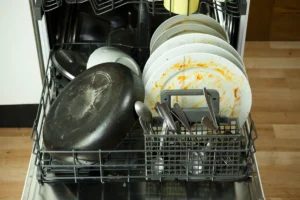
Open dishwasher rack filled with dirty, food-stained plates and a greasy skillet before a wash cycle.
Most dishwasher odors disappear after a thorough cleaning. If they don’t, it’s time to have the appliance professionally inspected.
Persistent smells often point to drainage problems, worn pumps, clogged hoses, or other internal issues that require specialized tools to diagnose properly.
Continuing to use a dishwasher that isn’t draining correctly can eventually damage other components and shorten the appliance’s lifespan.
Keep Your Dishwasher Smelling Fresh
A dishwasher should make your kitchen cleaner, not smell worse every time you open it.
Cleaning the filter regularly, wiping down the door gasket, leaving the door cracked open after cycles, and using the correct amount of detergent can go a long way toward preventing unpleasant odors.
If your dishwasher still smells bad after basic maintenance, Edmond Appliance Repair is here to help. Our experienced technicians can quickly identify the source of the problem, explain your repair options, and get your dishwasher running (and smelling) the way it should again.
Contact Edmond Appliance Repair today to schedule your dishwasher repair and enjoy clean dishes without the unpleasant surprises.
Leave a Reply
You must be logged in to post a comment.