
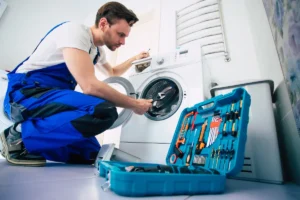
Professional technician in blue overalls repairing a front-load washing machine drum with tools in Edmond.
Few things ruin your day faster than walking into the laundry room and hearing that awful squish under your socks.
And when your washer is leaking, things escalate quickly. One minute, there’s a tiny puddle near the machine. A week later, the baseboards are swelling, the laundry room smells musty, and you’re Googling “washing machine leaking from bottom” while you’re throwing towels down everywhere.
The frustrating part is that washers leak for a lot of different reasons. Some are minor, but others point to bigger problems that can damage flooring, drywall, or the machine itself if they’re ignored too long. If you’re dealing with a leak, here’s what Edmond homeowners should check before the problem gets worse.
Start With the Drain Hose
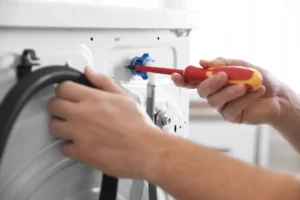
Close-up of a technician using a screwdriver to fix a water hose connection on the back of a washing machine.
One of the most common causes of washer leaks is also one of the easiest to overlook. Your drain hose handles a huge amount of water every cycle. Over time, that hose can loosen, crack, clog, or shift out of place. And once that happens, water starts escaping behind the machine during draining or spinning cycles.
A lot of people don’t notice it immediately because the leak starts slowly. You might just see occasional dampness behind the washer or small puddles near the wall.
Then, eventually, the spin cycle hits, the hose sprays water under pressure, and now the laundry room floor looks like a shallow swimming pool.
Check for loose hose connections, visible cracks or bulges, water dripping behind the washer, and kinks restricting water flow. Older homes in Edmond sometimes have washers pushed tightly against the wall, which can pinch or damage hoses over time, and is a common cause of leaks.
Front Load Washer Leaking? The Door Seal Could Be the Problem
Front load washers are notorious for door gasket issues. That thick rubber seal around the door constantly deals with soap residue, moisture, lint, pet hair, and tiny clothing fibers. Over time, grime builds up in the folds of the gasket, creating drainage problems.
Then water starts sneaking past the seal during cycles. Sometimes the gasket tears slightly without you noticing. Small objects like coins, bra wires, or zippers can puncture the rubber during washes. Even tiny damage can allow water to leak onto the floor. Many homeowners first notice this issue after seeing water pool directly beneath the door during cycles.
Mold buildup is another warning sign: if the gasket smells musty or has dark discoloration inside the folds, moisture may already be lingering where it shouldn’t.
Too Much Detergent Can Create Leaks
Overhead view of a repairman inspecting a stacked washer and dryer unit with a red tool case in Edmond.
This one surprises people all the time.
Modern washers use far less water than older machines. However, many people still use the same amount of detergent they used 15 years ago, which creates excessive suds.
Once too many suds build up inside the washer, pressure and overflow problems can start appearing around seals, vents, and drain systems. Some machines will even leak from the bottom because soap foam interferes with proper drainage.
High-efficiency washers are especially sensitive to this. If you’ve recently switched detergents, started using detergent pods, or accidentally grabbed non-HE detergent, that could absolutely contribute to leaking problems. You may notice the washer leaking more during larger loads or heavily soiled laundry cycles because those settings often increase detergent activity.
An Unbalanced Washer Can Shake Water Loose
Appliance repair technician kneeling next to an open white washing machine with a yellow toolbox.
Washers move aggressively during spin cycles. When the machine becomes unbalanced, vibrations can loosen connections and force water out where it shouldn’t go. This happens constantly with bulky items like comforters, rugs, dog beds, or overloaded towels.
In some cases, homeowners assume the washer itself is broken when the real problem is uneven flooring or an overloaded drum causing violent shaking. An unbalanced machine can:
- Loosen hose connections
- Damage internal suspension components
- Shift the washer out of position
- Create leaks around the door or pump assembly
For all these reasons and more, if your washer sounds like it’s trying to take off during spin cycles, don’t ignore it, since excessive vibration tends to create bigger repair issues over time.
Washing Machine Leaking From Bottom? The Drain Pump May Be Failing
If water consistently collects beneath the washer, especially during draining cycles, the drain pump may be failing.
The drain pump pushes wastewater out of the machine. Once the seals or internal components begin failing, water starts leaking directly from beneath the washer cabinet.
Pump leaks often get worse gradually. At first, you may only notice small puddles after larger loads. Then, eventually, every cycle leaves water behind.
You might also hear:
- Grinding noises
- Rattling during draining
- Humming without proper draining
- Slow water removal
Unfortunately, this probably isn’t one you should DIY. Drain pump repairs usually need professional attention because accessing the component often requires partially disassembling the washer.
When to Call for Washer Repair in Edmond, OK
Some washer leaks have obvious causes, but others need a trained technician to diagnose properly. If your washer keeps leaking after basic troubleshooting, makes unusual noises, struggles to drain, or leaves standing water beneath the machine, it’s time to get it inspected.
That’s especially true if the leak keeps returning despite tightening hoses or reducing detergent use. Modern washing machines have multiple internal components that can leak, including pumps, inlet valves, tub seals, internal hoses, and drain assemblies. If you catch those problems early, you can usually keep repairs far more affordable.
Professional washer repair in Edmond, OK, can help identify the source of the leak before water damage spreads further through your home. Give us a call today!
Leave a Reply
You must be logged in to post a comment.